
Your vehicle's braking system is vital for your safety and the safety of others on the road. Over time, various components of the braking system may require repairs or replacements to maintain optimal performance. Let's delve into each procedure in detail.
Complete Pad/Lining/Rotor Replacements
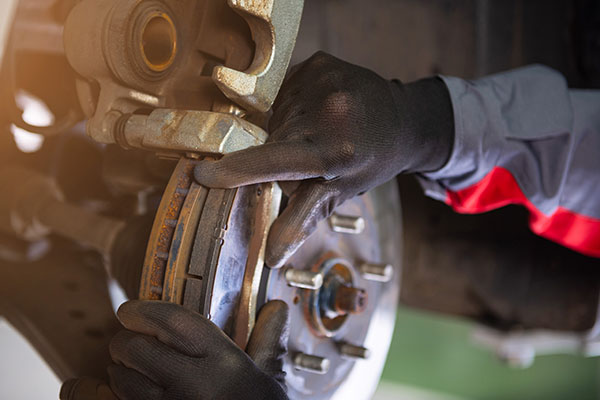
As an integral part of the braking system, brake pads or linings provide friction against the rotor, allowing the vehicle to slow down and stop. Over time, these components wear out and require replacement. During a complete pad/lining/rotor replacement, worn brake pads or linings are removed, and new ones are installed. Additionally, the rotors may be resurfaced or replaced if they have become too thin or damaged.
Anti-Lock Diagnostics
Anti-lock Braking System (ABS) diagnostics involve identifying and resolving issues related to the ABS. The ABS system prevents wheel lock-up during emergency braking, ensuring optimal control and stability. If your ABS warning light is illuminated or you experience unusual ABS behavior, a diagnostic test is performed to identify the specific problem and initiate the necessary repairs.
Hose & Line Replacement
Brake hoses and lines carry hydraulic fluid to the braking system components. Over time, they can become worn, brittle, or develop leaks, compromising the effectiveness of the braking system. During a hose and line replacement, damaged or deteriorated hoses and lines are replaced to ensure the proper flow of brake fluid and maintain reliable braking performance.
Hydraulic Problems (ABS, Wheel Cylinders)
Hydraulic problems in the braking system can lead to issues such as reduced braking power, spongy pedal feel, or uneven braking. These problems can arise due to various factors, including malfunctioning ABS components or faulty wheel cylinders. Hydraulic problem diagnosis and repair involve identifying the specific issue and replacing or repairing the affected components to restore the braking system's functionality.
Emergency Brake Diagnosis & Repair
The emergency brake, also known as the parking brake, is crucial for securing your vehicle when parked. If the emergency brake fails to engage or disengage properly, it requires diagnosis and repair. A professional inspection will identify the underlying problem, whether it's an issue with the cables, levers, or other components, and the necessary repairs will be performed.
Chemical Brake Fluid Service
Chemical brake fluid service involves using specialized solutions to clean the braking system and remove any contaminants that may impact its performance. This procedure helps restore optimal brake function and can extend the lifespan of the braking system components.
Lifetime Brake Pads & Shoes Available
Certain brake pads and shoe options are designed to have an extended lifespan, providing long-lasting performance and reducing the frequency of replacements. Opting for lifetime brake pads and shoes can be a cost-effective choice in the long run.
Machine Lathe
In some cases, brake rotors or drums may become warped or uneven. To address this, a machine lathe is used to resurface the rotor or drum, restoring a smooth and even braking surface. Machining the rotors or drums helps eliminate vibrations and improve overall braking performance.
Traction Control
Traction control is a safety feature that helps prevent wheel slippage during acceleration by modulating brake pressure and engine power. If the traction control system malfunctions or the warning light illuminates, diagnostics and repairs are necessary to ensure the system operates effectively.
All of the procedures we mentioned above are on our list! Advanced Auto Care Center Florida is here to help with the hall of your brake system, engine, transmission, and all other car-related repairs and maintenance - simply contact us and we will get on the job!
Recent Posts
- Will It Damage My Engine If I Continue To Drive My Car With The Check Engine Light On?Vehicles have an inbuilt computer diagnostic system that alerts drivers of potential problems. While the warning light signals vary, the most dreaded is the check engine light. It signals engine and emission problems. Can You Drive with the Engine Light On? The check engine light turns on for varied reasons. When it illuminates, remain calm… Read more: Will It Damage My Engine If I Continue To Drive My Car With The Check Engine Light On?
- Why Is My Steering Wheel Hard To Turn?Nowadays, driving is made easier with advancements in the automotive industry, which is why a stiff steering wheel may throw you off. If your steering wheel has felt harder to turn, your first intuition may be to stop driving and pay a visit to an auto repair shop. At a trusted auto service shop like… Read more: Why Is My Steering Wheel Hard To Turn?
- Why Is My Car’s Power Steering Making Noise?No one enjoys hearing strange noises from their car, especially when they come from the steering system. Power steering is designed to make driving more effortless, so when it starts groaning, whining, or squealing, it’s hard not to feel concerned. If your power steering is making noise, it’s trying to tell you something is wrong.… Read more: Why Is My Car’s Power Steering Making Noise?
- Why Is My Car A/C Blowing Warm Air?An optimally functioning air conditioning system is a MUST for those of us in Gainesville, FL, as temperatures keep hiking up. Imagine hopping into your vehicle on a hot, summer day only to be welcomed with hot air. Nobody wants to experience this! Why is your car blowing warm air even when you have the… Read more: Why Is My Car A/C Blowing Warm Air?
- Why Does My Car Smell Like Old Gym Socks When I Turn On The Air?It is one of the most unpleasant surprises your car can throw at you: a smell that reminds you of old gym socks, a damp towel, or something that has been sitting wet for far too long. At our shop, we hear this complaint all the time, especially when temperatures start rising and people begin… Read more: Why Does My Car Smell Like Old Gym Socks When I Turn On The Air?